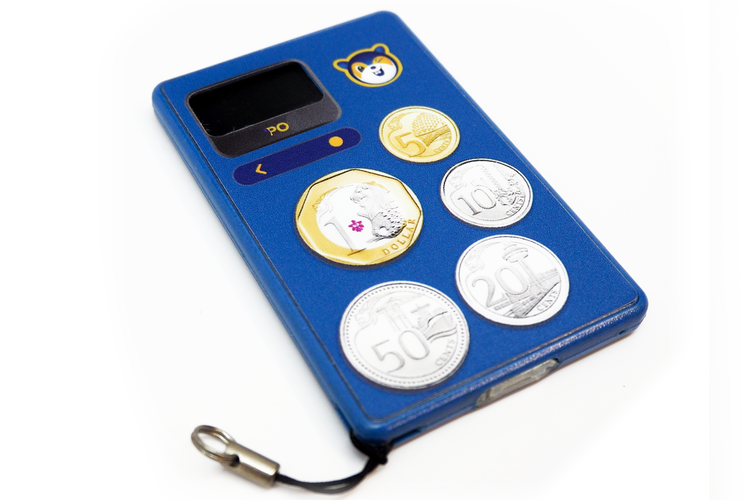
Pocket Money is a pocket-sized digital wallet, payment card, savings account and education in financial literacy. It bridges physical and digital money with a user interface that unifies elements of coin, card and mobile payment. The design preserves the students' ability to recognise and appreciate the value of money, even as they move into digital payments.
Awards
- The story of Pocket Money
User study
Bank Wants to transit children to cashless payment with the bank's products
Billy, 7 years old No smart phone. Needs to pay for food, stationery, public transport
Billy's mother, 36 years old Concerned with Billy's money management and financial literacy
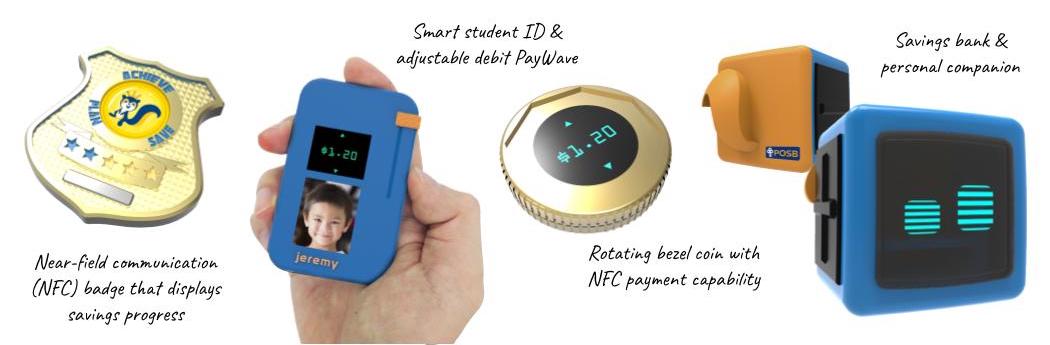
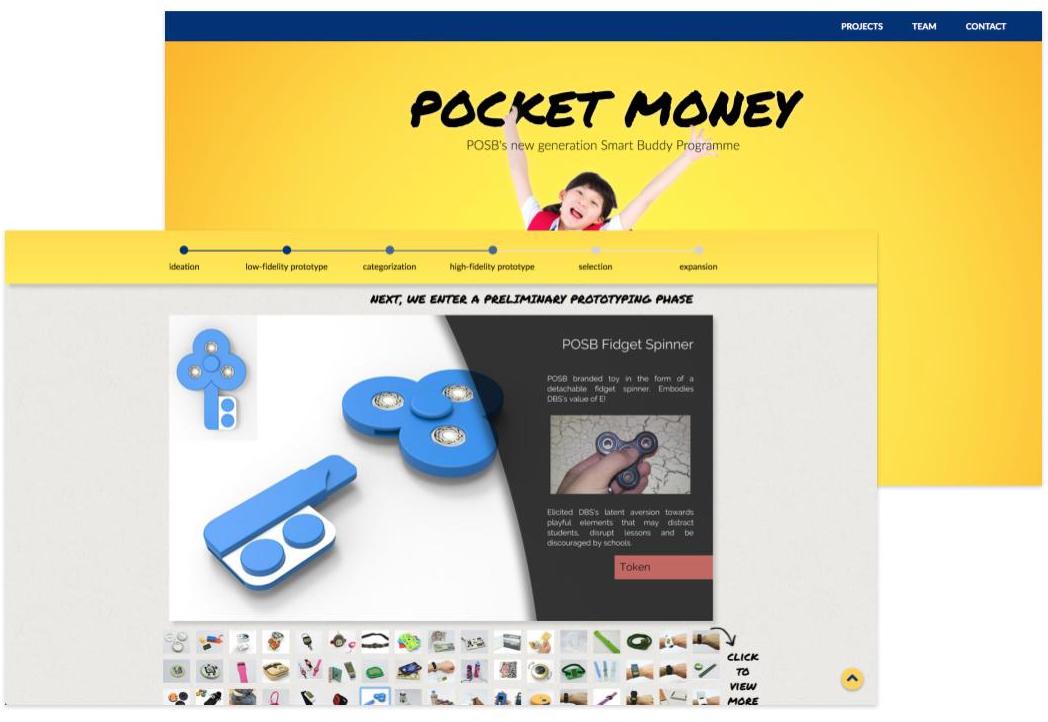
Ideation + prototyping
(excerpt of 175 prototypes)
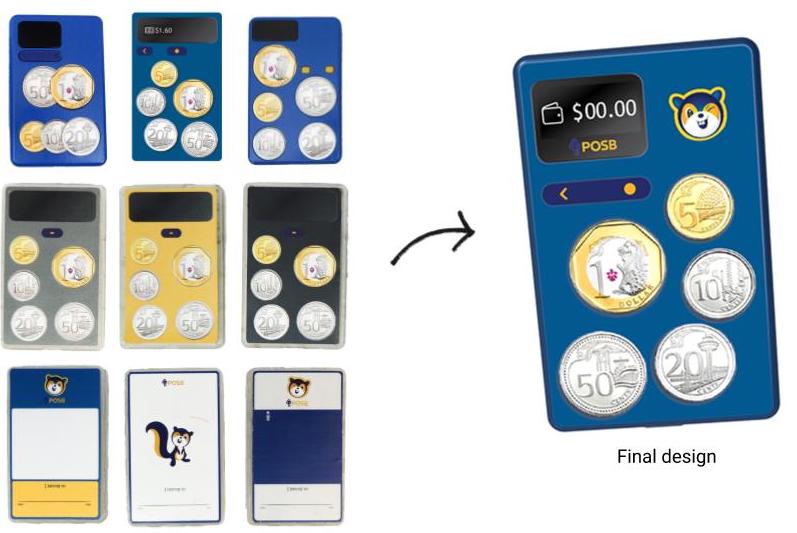
Design iteration of selected concept
(smart student ID)
A coin-like interface was selected to address concerns about students' appreciation of money, and an LED screen was adopted to support the development of an interactive application.
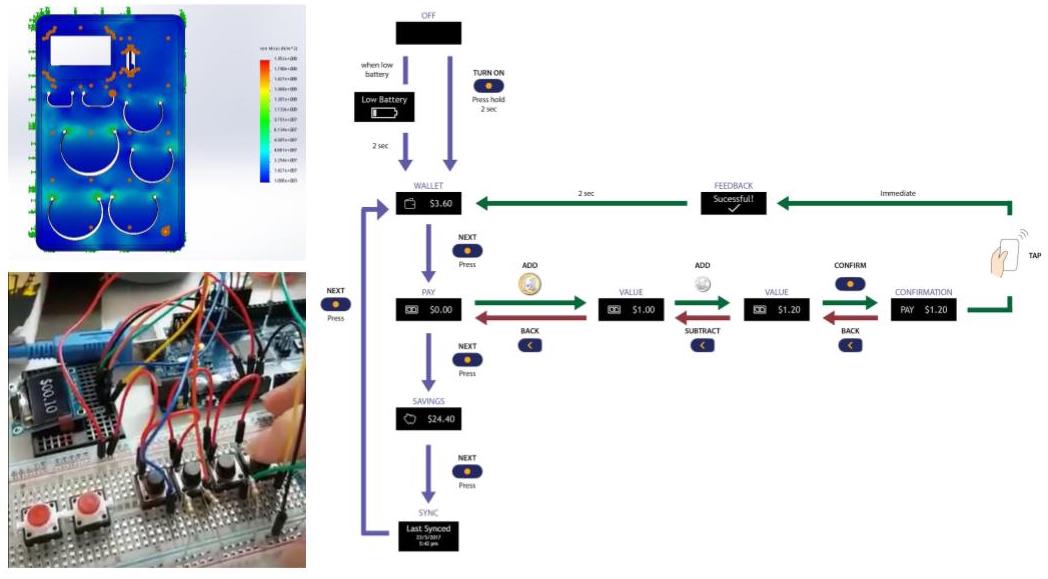
Mechanical, electronic, and digital interface development
A distributed stress cantilever button design allowed 7 different button parts to be integrated on one body. UI flow proved intuitive for children, and an integrated circuit was created after prototyping on Arduino.
Project delivery
Manufacture-ready assets were delivered together with award-winning working prototypes. A website was created to showcase design work and to illustrate product use to students and parents. Two publications were also published on this project.
Publications
O. Seow et al., Design Signatures: Mapping Design Innovation Processes. Design Studies, August 2018 E. Tiong, O.Seow, et al., Economics and Dimensionality of Prototyping: Value, Time, Cost and Fidelity. August 2018